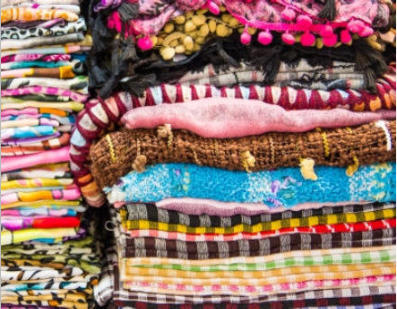

Fabric
Fabric is the base of the garment or the textile product And it’s a whole science. The parameters of a garment include: • • Material. Like 100% cotton, or 100% polyester or a blend like 97% cotton and 3% elastan. • Main type of fabric. Like Knitted, or Woven, or Denim … • Sub Type of fabric: Like Single Jersey, 1x1 rib, Interlock, Pique, … • Then the fabric has a weight: It’s measured in GSM, gram per square meter of fabric. • It has a colour • It may have gone through various treatments to achieve different effects, like enzyme wash. • Then there are organic fabrics and other special variants. • The length of the fibres in the yarn, the yarn count, and … • And so on, ... So it’s important to tell exactly what you want. Sending samples is a good option. Get it wrong and you may end up with problems, some examples: • The wrong fabric combined with as an example a specific printing method may lead to that the printing will crack or that a white print gets grey. • If you make a narrow ring-neck on a T-shirt you better have a stretchable fabric for it or it will be difficult to put the head into the T-shirt. • Use absolute natural colours when dying the fabric and a modern washing powder will remove that colour. • And so on. If you do not know how to select and describe why not ask us for some help.

© CrownBird 2019
Fabric














Fabric
Fabric is the base of the garment or the textile product And it’s a whole science. The parameters of a garment include: • • Material. Like 100% cotton, or 100% polyester or a blend like 97% cotton and 3% elastan. • Main type of fabric. Like Knitted, or Woven, or Denim … • Sub Type of fabric: Like Single Jersey, 1x1 rib, Interlock, Pique, … • Then the fabric has a weight: It’s measured in GSM, gram per square meter of fabric. • It has a colour • It may have gone through various treatments to achieve different effects, like enzyme wash. • Then there are organic fabrics and other special variants. • The length of the fibres in the yarn, the yarn count, and … • And so on, ... So it’s important to tell exactly what you want. Sending samples is a good option. Get it wrong and you may end up with problems, some examples: • The wrong fabric combined with as an example a specific printing method may lead to that the printing will crack or that a white print gets grey. • If you make a narrow ring-neck on a T-shirt you better have a stretchable fabric for it or it will be difficult to put the head into the T-shirt. • Use absolute natural colours when dying the fabric and a modern washing powder will remove that colour. • And so on. If you do not know how to select and describe why not ask us for some help.

© CrownBird 2019
Fabric